'The dungeon flamed with light'
Evangelical revivals of the 18th Century
Michael A. G. Haykin
Jonathan Edwards (4)
The impact of the revival that came to Northampton in the winter and spring of 1734-1735, which we looked at in November’s ET, was nothing less than profound. Jonathan Edwards put it thus.
‘This work of God, as it was carried on and the number of true saints multiplied, soon made a glorious alteration in the town: so that … the town seemed to be full of the presence of God: it never was so full of love, nor of joy, and yet so full of distress, as it was then.
‘There were remarkable tokens of God’s presence in almost every house. It was a time of joy in families on account of salvation being brought unto them; parents rejoicing over their children as new born, and husbands over their wives, and wives over their husbands.
‘The goings of God were then seen in his sanctuary, God’s day was a delight, and his tabernacles were amiable. Our public assemblies were then beautiful: the congregation was alive in God’s service, every one earnestly intent on the public worship, every hearer eager to drink in the words of the minister as they came from his mouth.
‘The assembly in general were, from time to time, in tears while the word was preached; some weeping with sorrow and distress, others with joy and love, others with pity and concern for the souls of their neighbours.’
Nor was the revival limited to the town of Northampton. It spread swiftly to thirty-two other towns throughout the Connecticut River Valley. It went north to Northfield and as far south as Guilford, Lyme, and even Groton, Connecticut.
A Word-centred revival
One of the central characteristics of this revival was a deep appreciation of the Word of God. In Edwards’ words: ‘While God was so remarkably present amongst us by his Spirit, there was no book so delightful as the Bible; especially the Book of Psalms, the Prophecy of Isaiah, and the New Testament’.
Edwards also cites the example of a seventy-year-old woman, who had spent most of her days under the ministry of his grandfather, Solomon Stoddard.
‘Reading in the New Testament concerning Christ’s sufferings for sinners, she seemed to be astonished at what she read, as what was real and very wonderful, but quite new to her.
‘At first, before she had time to turn her thoughts, she wondered within herself, that she had never heard of it before; but then immediately recollected herself, and thought she had often heard of it, and read it, but never till now saw it as real.’
Edwards’ account of this revival, the Faithful narrative of the surprising work of God, was first published in London in 1737.
Among those who read it at that time, and were deeply impressed, was Howel Harris (1714-1773), the Welsh Calvinistic Methodist evangelist, who came to possess a copy of the book in February 1738.
After reading it, he was led to pray: ‘O go on with thy work there [i.e. in New England] and here’. Harris’ prayer received an answer in 1740-1742, when God again visited New England with revival, but this time on a much more extensive scale.
The Great Awakening
This revival has come to be known as the Great Awakening (1740-1742), and it made a profound impact not only on New England, but also on the other American colonies to the south.
Estimates of those converted in New England alone, where the population was around 250,000 at the time, range from 25,000 to 50,000. These figures, it should be noted, do not include conversions among those who were already church members.
In the middle of the revival, William Cooper (1694-1743), one of Edwards’ most stalwart friends and the Congregationalist minister of Brattle Street Church, Boston, gave his perspective on what God was doing in his day. It reads as follows.
Uncommon zeal
‘The dispensation of grace we are now under, is certainly such as neither we nor our fathers have seen; and in some circumstances so wonderful, that I believe there has not been the like since the extraordinary pouring out of the Spirit immediately after our Lord’s ascension.
‘The apostolical times seem to have returned upon us: such a display has there been of the power and grace of the divine Spirit in the assemblies of his people, and such testimonies has he given to the word of the gospel…
‘A number of preachers have appeared among us, to whom God has given such a large measure of his Spirit, that we are ready sometimes to apply to them the character given of Barnabas, that "he was a good man, and full of the Holy Ghost, and of faith" (Acts 11:24).
‘They preach the gospel of the grace of God from place to place, with uncommon zeal and assiduity. The doctrines they insist on are the doctrines of the reformation, under the influence whereof the power of godliness so flourished in the last century.
‘The points on which their preaching mainly turns are those important ones of man’s guilt, corruption, and impotence; supernatural regeneration by the Spirit of God and free justification by faith in the righteousness of Christ; and the marks of the new birth.
‘The manner of their preaching is not with the "enticing words of man’s wisdom" (1 Corinthians 2:4); howbeit, they "speak wisdom among them that are perfect" (1 Corinthians 2:6).
‘An ardent love to Christ and souls warms their breasts and animates their labours. God has made those his ministers active spirits, a flame of fire in his service; and his word in their mouths has been, "as a fire, and as a hammer that breaketh the rock in pieces" (Jeremiah 23:29).’
Sweep of church history
Here Cooper places the revival in New England within the broad sweep of church history. He is utterly convinced that no other revival, in either his lifetime or that of his Puritan forebears, was comparable to what God was doing in the early 1740s. In some respects only at the time of Pentecost could one find something genuinely comparable!
However, the preaching through which God had brought about this revival contained nothing new.
Essentially, it was the same doctrine of salvation that was trumpeted forth at the time of the Reformation and in the Puritan era — one that highlighted humanity’s total depravity, the Spirit’s glorious sovereignty in regenerating sinners, and their justification by faith alone in Christ.
And the preaching style fitted the doctrine — it was plain and ardent.
Seeking new birth
Cooper goes on to specify what he considers so extraordinary about the revival. First, there is the incredible way that it swept through ‘some of the most populous towns, the chief places of concourse and business’.
Then there were the numbers that professed conversion — ‘stupid sinners have been awakened by hundreds’. During the winter of 1740-1741 in Boston alone, Cooper states, ‘some thousands [were] under such religious impressions as they never felt before’.
People of all ages, from the very elderly to the very young, were saved — the elderly ‘snatched as brands out of the burning, made monuments of divine mercy’ and ‘sprightly youth … made to bow like willows to the Redeemer’s sceptre’.
Moreover, God drew to himself some of the grossest sinners in New England — drunkards, fornicators and adulterers, people addicted to profanity and ‘carnal worldlings … made to seek first the kingdom of God and his righteousness’.
On the other hand, many of those who deemed themselves upright and moral became convinced that ‘morality is not to be relied on for life; and [were] so excited to seek after the new birth, and a vital union to Jesus Christ by faith’.
Critics of the revival
The revival, however, was not without its critics. Many who had been deeply impacted by the worldview of the eighteenth-century Enlightenment sought to write the revival off as sheer ‘enthusiasm’ (i.e. fanaticism).
Edwards profoundly disagreed with this interpretation, though he was not slow to critique theological and practical aberrations when they appeared during and in the wake of the revival.
Friday, January 05, 2007


Tuesday, January 02, 2007
Jonathan Edwards on Revival (Part III)
Happy New Year! Here is part 3 of Jonathan Edward's perspective on revival. What happens before and during revival? Well, see below...
'The dungeon flamed with light'
Evangelical revivals of the 18th century
Jonathan Edwards (3)
by Michael A. G. Haykin
Jonathan Edwards (3)
by Michael A. G. Haykin
After two relatively brief stints pastoring in New York and Bolton, Connecticut, Jonathan Edwards served as a tutor at his alma mater in New Haven from 1724 to 1726. It was, however, a situation in which he was not entirely happy.
He finally found his niche in August 1726, when he was invited to become assistant to his grandfather, Solomon Stoddard, in Northampton, Massachusetts. When Stoddard died in February 1729, Edwards became the sole pastor of the church.
Sarah Edwards
Within a year of arriving at Northampton, Edwards had married. He had known his bride, Sarah Pierpont (1710-1758), since his days at Yale. What had impressed him when they first met in 1723 was her piety and spiritual maturity.
Though she was but thirteen at the time, he wrote of his future wife: ‘They say there is a young lady in [New Haven] who is beloved of that almighty Being, who made and rules the world, and that there are certain seasons in which this great Being, in some way or other invisible, comes to her and fills her mind with exceeding sweet delight; and that she hardly cares for any thing, except to meditate on him’.
By God’s grace Edwards had found a soul-mate — her affective piety and commitment to meditation upon God and spiritual things were in perfect harmony with his spirituality of the Word. They were married on 28 July 1727.
Northampton in the 1730s
The Northampton church had enjoyed a number of small revivals during Solomon Stoddard’s long pastorate, the last one in 1718. After that time, though, Edwards judged there had been little spiritual advance. In his words, taken from his account of the revival, the A faithful
Narrative:
‘Just after my grandfather’s death, it seemed to be a time of extraordinary dullness in religion. Licentiousness for some years prevailed among the youth of the town; they were many of them very much addicted to night-walking, and frequenting the tavern, and lewd practices, wherein some, by their example, exceedingly corrupted others.
‘It was their manner very frequently to get together, in conventions of both sexes for mirth and jollity, which they called frolics; and they would often spend the greater part of the night in them, without regard to any order in the families they belonged to: and indeed family government did too much fail in the town.
‘It was become very customary with many of our young people to be indecent in their carriage at meetings, which doubtless would not have prevailed in such a degree, had it not been that my grandfather, through his great age (though he retained his powers, surprisingly to the last), was not so able to observe them.
‘There had also long prevailed in the town a spirit of contention between two parties, into which they had for many years been divided; by which they maintained a jealousy one of the other, and were prepared to oppose one another in all public affairs.’
No inward religion
As Edwards notes, the adults in the town were split into two factions, the ‘haves’ and the ‘have-nots’ — those who were wealthy and had property, and those who were jealous of them and who sought to diminish their power and influence.
Most of these adults were taken up, not with the things of God and his kingdom, but with other cares and pursuits, especially the pursuit of material wealth. Outwardly they were orthodox, but they had no inward religion.
Their orthodoxy was dry and lifeless. Not surprisingly their children were, in Edwards’ own words, ‘very much addicted to night-walking, and frequenting the tavern, and lewd practices’. As American historian Richard Lovelace has noted, if these teens had had drugs, they would have used them.
Justification by faith alone
In the early 1730s, however, there was a growing sensitivity to sin and a willingness to listen to religious counsel.
A series of sermons on justification by faith alone — the doctrine that had been so central to the Reformation — were particularly used of God to awaken the lost and the spiritually indifferent. The series was preached by Edwards in November and December 1734.
Edwards especially stressed that God, in justifying sinners, does so on the basis of his mercy alone. Those whom God saves are not saved because God sees anything in them that would merit his favour and blessing.
To quote Edwards, when God justifies a person he ‘has no regard to anything in the person justified, as godliness, or any goodness’. In fact, Edwards went on to say, ‘before this act [of justification], God beholds him as an ungodly creature’.
Justification entails God choosing to reckon Christ’s perfect righteousness to the sinner and in this way the sinner can be declared righteous.
Revival in Northampton
Edwards identified the exposition of this central feature of the New Testament as the major catalyst that the Holy Spirit used to begin an extraordinary time of revival in Northampton. He wrote:
‘There were some things said publicly … concerning justification by faith alone … It proved a word spoken in season here; and was most evidently attended with a very remarkable blessing of heaven to the souls of the people in this town…
‘And then it was, in the latter part of December [1734], that the Spirit of God began extraordinarily to set in, and wonderfully to work amongst us; and there were very suddenly, one after another, five or six persons, who were to all appearances savingly converted, and some of them wrought upon in a very remarkable manner.’
Edwards here makes a direct link between the preaching of biblical truth and the onset of revival. It was after the preaching of justification by faith alone — which Edwards also denotes as ‘the way of the gospel … the true and only way’ — that the Spirit began to work so ‘wonderfully’ and ‘suddenly’.
Not reason alone
It is important to emphasise what American church historian John Hannah has pointed out:
‘Though Edwards presented argument after argument to sustain his points [in his sermons], he did not believe that rational explanations or carefully crafted sermons possessed the power in themselves to convince anyone.
‘He felt that that was the work of the Holy Spirit through the Word of God. He wrote, "The light of reason convinces the world that it is so: the Word of God puts it past doubt". Reason can demonstrate that something is true, but only the Spirit of God can create an affectionate desire or delight in it.’
The great concern
Soon, an intense concern gripped the town to be right with God and to walk with him. Edwards narrates in his account of this revival:
‘Although people did not ordinarily neglect their worldly business, yet religion was with all sorts the great concern, and the world was a thing only by the bye. The only thing in their view was to get the kingdom of heaven, and every one appeared pressing into it...
‘It then was a dreadful thing amongst us to lie out of Christ, in danger every day of dropping into hell; and what persons’ minds were intent upon, was to escape for their lives, and to fly from wrath to come.
‘All would eagerly lay hold of opportunities for their souls, and were wont very often to meet together in private houses, for religious purposes: and such meetings when appointed were greatly thronged.’
Conversions overestimated
Out of a town of about twelve hundred people, Edwards initially reckoned that some three hundred were saved in about six months.
At the revival’s height, in March and April of 1735, there were about thirty people a week professing conversion. Many of them could be seen on a Monday morning waiting outside Edwards’ home, seeking to talk to their pastor about the state of their souls.
Edwards would later judge that there were not as many converts as he had thought during the actual time of the revival. Nevertheless, he never doubted that what took place during 1734 and 1735 was a great, God-wrought awakening in the town.
In the next instalment we shall look at the impact of this revival and the coming of the Great Awakening in 1740-1742.
Friday, December 29, 2006
Do We Want Revival in 2007?
In between our look of Jonathan Edward's look at revival, I give a blog entry of Darryl Dash, a Toronto pastor and writer. Darryl is a classmate and friend (I think) of mine.
Darryl's Blog
« We're back Main 2007 »
What I Long For in 2007
My latest column at Christian Week:
"Nothing changes on New Year's Day," sings Bono, lead singer of U2. Later in the same song, Bono continues, "I will begin again." Nothing changes as we start 2007, but I pray it is possible, in some ways, to begin again.
Speaking in Toronto last year, pastor and author Gordon MacDonald defined revival as bringing something back to life. We need two kinds of revival, MacDonald argued. One is big-R Revival, which is needed at crisis points five or six times within one's life. The other is small-r revival, which we need on a daily basis. I long for both kinds of revival in the coming year.
Big-R Revival
I grew up in the church. I am used to North American Christianity. Somehow I've picked up some modern ways of thinking about church which really aren't helpful and have lead me to some crisis points. I hope to continue the big-R Revival in how I think about effective ministry.
I need, for instance, to give up my longing for Christendom. Part of me still longs for the days when Christianity was dominant within Canadian culture and the Church had influence. Those days aren't coming back, but that is okay. God is more than up to the challenge.
I need to give up my reliance on techniques and pragmatism. At no stage in Christian history have we had better programs, techniques, and leadership theories. New programs and techniques come out almost daily. Despite all these techniques, the North American church is struggling at its core. The late Canadian theologian Stanley Grenz wrote that a pragmatic approach to ministry is "self-defeating, simply because it transforms the community of faith into an institution whose chief end is not the glory of God and the fulfillment of a divinely-given mandate, but survival." Real change does not come from better techniques.
I need a revival in the way that I think about the gospel. Canadian theologian J.I. Packer says,
"Without realizing it, we have during the past century bartered that gospel for a substitute product, which, though it looks similar in enough points of detail, is as a whole a decidedly different thing. Hence our troubles; for the substitute product does not answer the ends for which the authentic gospel has in days proved itself so mighty." Recovering the gospel, and bringing our ministries back into line with it, is perhaps our most pressing need, according to Packer.
I also need to deal with my pastoral ambitions. "I am convinced that personal pastoral ambition, and a pastoral ethic centered around productivity and success is brutal to our souls and destructive to the souls of the people we lead," writes one pastor, Kent Carlson. "We must become skilled at detecting the odor of personal ambition, then flee from it as if the church's future depends on it. For I believe it does."
Mostly, I need to rediscover true Biblical ministry, centered not around meeting human needs with a truncated gospel in an attempt to win people over to a human institution. Rather, it is about becoming an alternate community shaped by the Gospel, sent by God to participate in his mission to the world.
Small-R Revival
I confided to a friend recently that I don't know if I have what it takes to lead a congregation to effective ministry in a changing culture. This isn't false modesty. It is relatively easy to be a transactional leader who maintains a congregation; it is much more difficult to be a transformational leader who sees real change at the deepest levels. Nobody is able to do this on their own.
I hope to be revived on a daily basis this year so I'm reminded I don't have to lead on my own.
"I want to encourage you," a friend wrote to me recently, "that you don't have to fix anyone's problems. You just need to point them to Jesus. He does the work - you are just the vehicle that he works through." As Jesus said, "Apart from me you can do nothing." I want to learn this and live this on a daily basis.
These are the revivals, big and small, that I long for this coming year.
Tags:
2007
New Year
Posted by Darryl on December 28, 2006 2:33 PM Permalink
TrackBack
TrackBack URL for this entry:http://www.dashhouse.com/cgi-bin/mt/mt-tb.cgi/1521
Comments (2)wilsonian :
"becoming an alternate community shaped by the Gospel, sent by God to participate in his mission to the world"
We all need that kind of revival. Bring it!
Posted by wilsonian December 28, 2006 3:38 PM
Posted on December 28, 2006 15:38 Bryan :
Darryl, I am stealing this and posting it on my blog. Good stuff man and Happy New Year!
Posted by Bryan December 29, 2006 1:58 PM
Posted on December 29, 2006 13:58
Darryl's Blog
« We're back Main 2007 »
What I Long For in 2007
My latest column at Christian Week:
"Nothing changes on New Year's Day," sings Bono, lead singer of U2. Later in the same song, Bono continues, "I will begin again." Nothing changes as we start 2007, but I pray it is possible, in some ways, to begin again.
Speaking in Toronto last year, pastor and author Gordon MacDonald defined revival as bringing something back to life. We need two kinds of revival, MacDonald argued. One is big-R Revival, which is needed at crisis points five or six times within one's life. The other is small-r revival, which we need on a daily basis. I long for both kinds of revival in the coming year.
Big-R Revival
I grew up in the church. I am used to North American Christianity. Somehow I've picked up some modern ways of thinking about church which really aren't helpful and have lead me to some crisis points. I hope to continue the big-R Revival in how I think about effective ministry.
I need, for instance, to give up my longing for Christendom. Part of me still longs for the days when Christianity was dominant within Canadian culture and the Church had influence. Those days aren't coming back, but that is okay. God is more than up to the challenge.
I need to give up my reliance on techniques and pragmatism. At no stage in Christian history have we had better programs, techniques, and leadership theories. New programs and techniques come out almost daily. Despite all these techniques, the North American church is struggling at its core. The late Canadian theologian Stanley Grenz wrote that a pragmatic approach to ministry is "self-defeating, simply because it transforms the community of faith into an institution whose chief end is not the glory of God and the fulfillment of a divinely-given mandate, but survival." Real change does not come from better techniques.
I need a revival in the way that I think about the gospel. Canadian theologian J.I. Packer says,
"Without realizing it, we have during the past century bartered that gospel for a substitute product, which, though it looks similar in enough points of detail, is as a whole a decidedly different thing. Hence our troubles; for the substitute product does not answer the ends for which the authentic gospel has in days proved itself so mighty." Recovering the gospel, and bringing our ministries back into line with it, is perhaps our most pressing need, according to Packer.
I also need to deal with my pastoral ambitions. "I am convinced that personal pastoral ambition, and a pastoral ethic centered around productivity and success is brutal to our souls and destructive to the souls of the people we lead," writes one pastor, Kent Carlson. "We must become skilled at detecting the odor of personal ambition, then flee from it as if the church's future depends on it. For I believe it does."
Mostly, I need to rediscover true Biblical ministry, centered not around meeting human needs with a truncated gospel in an attempt to win people over to a human institution. Rather, it is about becoming an alternate community shaped by the Gospel, sent by God to participate in his mission to the world.
Small-R Revival
I confided to a friend recently that I don't know if I have what it takes to lead a congregation to effective ministry in a changing culture. This isn't false modesty. It is relatively easy to be a transactional leader who maintains a congregation; it is much more difficult to be a transformational leader who sees real change at the deepest levels. Nobody is able to do this on their own.
I hope to be revived on a daily basis this year so I'm reminded I don't have to lead on my own.
"I want to encourage you," a friend wrote to me recently, "that you don't have to fix anyone's problems. You just need to point them to Jesus. He does the work - you are just the vehicle that he works through." As Jesus said, "Apart from me you can do nothing." I want to learn this and live this on a daily basis.
These are the revivals, big and small, that I long for this coming year.
Tags:
2007
New Year
Posted by Darryl on December 28, 2006 2:33 PM Permalink
TrackBack
TrackBack URL for this entry:http://www.dashhouse.com/cgi-bin/mt/mt-tb.cgi/1521
Comments (2)wilsonian :
"becoming an alternate community shaped by the Gospel, sent by God to participate in his mission to the world"
We all need that kind of revival. Bring it!
Posted by wilsonian December 28, 2006 3:38 PM
Posted on December 28, 2006 15:38 Bryan :
Darryl, I am stealing this and posting it on my blog. Good stuff man and Happy New Year!
Posted by Bryan December 29, 2006 1:58 PM
Posted on December 29, 2006 13:58
Thursday, December 28, 2006
Jonathan Edwards on Revival (Part II)
Good afternoon all. Here is part 2 of Michael Haykin's article on Jonathan Edwards perspective on revival. It is Edward's life story. Notice that the attributes of discipline and holiness are part of his life. Have a great day. Bryan
'The dungeon flamed with light'
Evangelical revival of the 18th Century
by Michael A. G. Haykin
Jonathan Edwards (2)
Evangelical revival of the 18th Century
by Michael A. G. Haykin
Jonathan Edwards (2)
Jonathan Edwards was born exactly 300 years ago on 5 October 1703 at East Windsor, Connecticut, a town then far from the centres of power and influence in the transatlantic Anglophone world.
His father, Timothy Edwards (d.1758), was pastor of the town’s Congregational Church for more than 63 years. His mother, Esther, was the daughter of Solomon Stoddard (1643-1729), the powerful pastor of the Congregational Church in Northampton, Massachusetts, from 1669 till his death.
Edwards received his elementary education from his father — an education that included beginning Latin at seven. He also received a thorough nurture in Puritan piety.
Childhood spirituality
In Edwards’ Personal Narrative he notes of this time in his life: ‘I had a variety of concerns and exercises about my soul from my childhood; but had two more remarkable seasons of awakening… The first time was when I was a boy, some years before I went to college, at a time of a remarkable awakening in my father’s congregation…
‘I used to pray five times a day in secret, and to spend much time in religious talk with other boys; and used to meet with them to pray together … I, with some of my schoolmates joined together, and built a booth in a swamp, in a very retired spot, for a place of prayer.
‘My affections seemed to be lively and easily moved, and I seemed to be in my element, when engaged in religious duties.’
But this childhood spirituality, although a prognostication of his future interests, soon disappeared. In his own words, he ‘returned like a dog to his vomit, and went on in ways of sin’.
No inner peace
Meanwhile, in 1716, Edwards entered the Collegiate School of Connecticut in New Haven (later to become Yale University). Although he went on to graduate from the Collegiate School in 1720 at the head of his class academically, Edwards had neither inner peace nor saving faith.
Writing later of his life at this time, he said that it was characterised ‘by great and violent inward struggles’ regarding wicked inclinations and objections against God’s sovereignty in salvation.
Conversion
It was probably in the spring of 1721 that Edwards was converted. He later said that as he was reading 1 Timothy 1:17, ‘there came into my soul, and was as it were diffused through it, a sense of the glory of the Divine Being; a new sense, quite different from any thing I ever experienced before.
‘Never any words of Scripture seemed to me as these words did. I thought with myself, how excellent a Being that was; and how happy I should be, if I might enjoy that God, and be rapt up to him in Heaven, and be as it were swallowed up in him for ever…
‘From about that time, I began to have a new kind of apprehension and ideas of Christ, and the work of redemption, and the glorious way of salvation by him. An inward, sweet sense of these things, at times, came into my heart; and my soul was led away in pleasant views and contemplations of them.
‘And my mind was greatly engaged to spend my time in reading and meditating on Christ, on the beauty and excellency of his person, and the lovely way of salvation, by free grace in him.’
Scripture central
It is vital, first of all, to note that Scripture was central in Edwards’ conversion. Not surprisingly, he would later maintain that Scripture needs to be central in all preaching, for the Scriptures ‘are the light by which ministers must be enlightened, and the light they are to hold forth to their hearers; and they are the fire whence their hearts and the hearts of their hearers must be enkindled’.
In the above account of his conversion, Edwards also highlights the ‘inward, sweet sense’ that gripped his soul as he meditated upon what Scripture says about God and Christ, and on their utterly free and sovereign grace in salvation.
Such biblical meditation would become central to his piety. Samuel Hopkins (1721-1803), one of his close friends and his first biographer, noted that Edwards was, ‘as far as it can be known, much on his knees in secret, and in devout reading of God’s word and meditation upon it’.
Resolutions
Not long after his conversion Edwards drew up what are known as the Resolutions (1722-1723) in which, at the outset of his Christian life, he committed himself to keeping a list of 70 guidelines to help him stay passionate in his pursuit of God and his glory.
Hopkins commented that these resolutions ‘may justly be considered as the foundation and plan of his whole life’.
Though young when he wrote them, they bespeak a mature understanding of genuine piety — and the way such piety should be evident in all of life, and pursued with ardour and zeal.
In Resolution 26, for example, he ‘resolved, to cast away such things as I find do abate my assurance [of salvation]’. Resolution 40, written on 7 January 1723, subjected his eating and drinking habits to scrutiny: ‘Resolved, to inquire every night, before I go to bed, whether I have acted in the best way I possibly could, with respect to eating and drinking’.
The final resolution, the seventieth, recognises the importance of being circumspect in all of his speech: ‘Let there be something of benevolence in all that I speak’.
And in Resolution 56, Edwards admits to times of spiritual failure but was resolved ‘never to give over, nor in the least to slacken my fight with my corruptions, however unsuccessful I may be’.
The Scriptures
One resolution deals especially with God’s Word. Resolution 28 stated what he hoped would be a life-long characteristic of the way he approached Scripture: ‘Resolved, to study the Scriptures so steadily, constantly, and frequently, as that I may find, and plainly perceive, myself to grow in the knowledge of the same’.
The adverbs Edwards uses here — ‘steadily, constantly, and frequently’ — surely indicate his desire to steep his mind in Scripture.
What Edwards appears to be encouraging here is nothing less than saturating the heart and mind with scriptural truth and the meta-narrative of the Bible, something accomplished by the practice of biblical meditation.
This can be readily seen from a second statement, in which he describes his encounter with Scripture after his conversion. This text also makes it abundantly clear that he is not merely thinking of academic Bible study in Resolution 28.
‘I had then, and at other times, the greatest delight in the holy Scriptures, of any book whatsoever. Oftentimes in reading it, every word seemed to touch my heart. I felt an harmony between something in my heart, and those sweet and powerful words. I seemed often to see so much light, exhibited by every sentence, and such a refreshing ravishing food communicated, that I could not get along in reading.
‘Used oftentimes to dwell long on one sentence, to see the wonders contained it; and yet almost every sentence seemed to be full of wonders.’
Pattern
This pattern of meditation on God’s holy Word, one that was part of Edwards’ Puritan heritage, appears to have been central to his walk with God in the latter years of his life as well.
Samuel Hopkins noted that Edwards ‘had an uncommon thirst for knowledge, in the pursuit of which, he spared no cost nor pains’. He thus ‘read all the books, especially books of divinity’, that he could get hold of.
But, Hopkins emphasised, ‘he studied the Bible more than all other books, and more than most other divines do. His uncommon acquaintance with the Bible appears in his sermons, and in most of his publications; and his great pains in studying it are manifest in his manuscript notes upon it’.
To be concluded
Wednesday, December 27, 2006
Jonathan Edwards on Revival (Part I)

Good morning. Pastor and theologian, Jonathan Edwards not only wrote about revival, but he experienced authentic revival in his lifetime. I want to share a series by Michael Haykin about Edward's perspective on the subject. The entire series can be found at www.monergism.com. As we enter the year 2007, may we all be in awe of God's glory and beauty...
'The dungeon flamed with light'
Evangelical revivals of the 18th Century
Jonathan Edwards (1703-1758) Part 1
by Michael Haykin
Jonathan Edwards (1703-1758) Part 1
by Michael Haykin
The writings of the New England divine Jonathan Edwards (1703-1758) are of special importance when it comes to the subject of the Holy Spirit’s work in personal renewal and corporate revival.
This is because — as Martyn Lloyd-Jones once said — Edwards is ‘pre-eminently the theologian of revival’. His writings on the subject possess ongoing value, because, first of all, they are rooted in a personal and intimate acquaintance with revival.
Mapping revival
The earliest letter we possess from his hand, written to his elder sister Mary when he was but twelve years of age, tells of a revival in his hometown of East Windsor, Connecticut. It occurred under the preaching of his father, Timothy Edwards (1669-1758).
He describes it as ‘a very remarkable stirring and pouring out of the Spirit of God’. While the revival was in progress, it was common on Mondays (after the Word had been preached the day before) for ‘above thirty persons to speak with father about the condition of their souls’.
More significantly, the revival that profoundly affected the Connecticut Valley during the winter of 1734-1735 began in Jonathan Edwards’ own church in Northampton, Massachusetts.
He subsequently described and analysed this work in his book A Faithful Narrative of the Surprising Work of God in the Conversion of Many Hundred Souls in Northampton, and the Neighbouring Towns and Villages of New [sic] Hampshire in New-England (1737).
Over a hundred years later this powerful book was still being consulted as a handbook on the nature of revival.
The Great Awakening
Five years after this regional revival, there occurred what is known as the Great Awakening — the revival that swept the entirety of the American colonies from 1740 to 1742.
Although the English itinerant evangelist George Whitefield (1714-1770) was the main human instrument in this revival, Edwards also played a very prominent role, travelling and preaching extensively beyond the borders of his own parish.
Moreover, in print, Edwards was this revival’s most theologically astute champion as well as its most perceptive critic. This dual role with regard to the revival gave birth to some of Edwards’ finest books.
Some of these works are still regarded as Christian classics, of which the most notable is A Treatise Concerning Religious Affections (1746).
Knowing the heart
Edwards’ reflections on the work of the Spirit are also of immense value because he possessed a wonderful facility for meticulous and minute observation.
This facility can be seen in the intriguing and detailed investigation he conducted during the early 1720s into the way spiders made their webs. Later in his life, this gift — now exercised in the realm of pastoral ministry and theology — yielded a profound understanding of the human heart and its workings.
Sereno E. Dwight, Edwards’ great grandson and one of his early biographers, stated that his ‘knowledge of the human heart, and its operations, has scarcely been equalled by that of any uninspired preacher’.
Dwight goes on to mention three probable sources for this insightful understanding of the human heart — Edwards’ perceptive reading of the Scriptures; ‘his thorough acquaintance with his own heart’; and his grasp of philosophy.
Thus, it should not be surprising that the combination of personal experience and empirical insight — insight that is thoroughly rooted in Scripture — produced some of the most significant literature on the Spirit’s work in revival in the history of the church.
To quote Lloyd-Jones again: ‘If you want to know anything about the psychology of religion, conversion, revivals, read Jonathan Edwards’.
Pursuing God’s glory
One further reason for the classic nature of Jonathan Edwards’ corpus of work on revival is the fact that he was blessed with a heart devoted to the pursuit of the glory of God.
‘The great end of God’s works’, Edwards wrote, ‘is most properly and comprehensively called, the glory of God’.
According to the American writer Joseph G. Haroutunian, even ‘a superficial perusal of the essays and sermons of Edwards reveals a mind passionately devoted to God, permeated with the beauty and excellence of God’.
Haroutunian cites as an example a passage from the sermon ‘Ruth’s resolution’, which Edwards preached during the revival in Northampton in 1734-1735 and which was published three years later.
Reflecting on Ruth’s determination to cleave to her mother-in-law Naomi, and to embrace her God, the God of Israel, as her own (Ruth 1:16), Edwards stated that this God is ‘[a] glorious God. There is none like him, who is infinite in glory and excellency. He is the most high God, glorious in holiness, fearful in praises, doing wonders.
‘His name is excellent in all the earth, and his glory is above the heavens. Among the gods there is none like unto him; there is none in heaven to be compared to him, nor are there any among the sons of the mighty that can be likened unto him…
‘God is the fountain of all good, and an inexhaustible fountain; he is an all-sufficient God, able to protect and defend … and do all things … He is the king of glory, the Lord strong and mighty, the Lord mighty in battle: a strong rock, and a high tower…
‘He is a God who hath all things in his hands, and does whatsoever he pleases: he killeth and maketh alive; he bringeth down to the grave and bringeth up; he maketh poor and maketh rich: the pillars of the earth are the Lord’s…
‘God is an infinitely holy God; there is none holy as the Lord. And he is infinitely good and merciful. Many that others worship and serve as gods, are cruel beings, spirits that seek the ruin of souls; but this is a God that delighteth in mercy; his grace is infinite, and endures for ever. He is love itself, an infinite fountain and ocean of it.’
Characteristic
As Haroutunian notes, this passage is characteristic of Edwards’ view of God — especially in its focus on God’s unique excellence and the fact that the one we ever seek to glorify and serve is ‘the Creator of the universe and the Fountain of all beauty and excellence’.
This God-centred perspective led Edwards to support and promote the revivals of his day, because he saw God at work in them, bringing glory to himself.
Written from this perspective, these works on revival have been recognised by later evangelical authors as providing something of a benchmark for reflection on the nature of spiritual awakening.
Contemporary Evangelicalism, largely indifferent to the glory and beauty of God, sorely needs to ponder this rich and profound corpus of literature on revival.
To be continued...
Monday, December 25, 2006
Merry Christmas

Good Morning and Merry Christmas. Below is a great read by Pastor Charles Biggs about Christmas. It is a long article. However, it is very helpful in opening our minds to the coming of Jesus in the world. Bryan
I’m not a big fan of such things as books addressed to “dummies”, nor theology that has to be proven relevant before being heard, nor am I a fan of education for the sake of merely getting a job, nor of little cutesy figurines with scripture slapped on them, nor of plastic lit up baby Jesus in someone’s front yard, nor of reality TV, and neither am I a fan of acrostics in order to communicate biblical truths.
With that said, I must say that sometimes one perhaps will look inside a book addressed to dummies for some quick info, try to work hard and make theology relevant to the theologically skeptical, go to some classes for a raise or a new position, receive and proudly display a cutesy figurine with a scripture from someone who loves us, reflect upon the meaning of the incarnation upon seeing a lit up baby Jesus, watch a reality show to see what all the hype is about, and someone may even use an acrostic to communicate some gospel truths.
I am about to be guilty of the last one of those things of which I’m not a big fan.
I am about to be guilty of the last one of those things of which I’m not a big fan.
With that warning, and with the reminder that acrostics have limits, and can be simplistic if that is all that is all the understanding we have, I want to send your family an acrostic to reflect upon the gospel truths we learned together and summarizes the preaching and teaching this year at Ketoctin Covenant Presbyterian Church (www.aplacefortruth.org/ketoctin).
Using the letters from the word 'Christmas', we can reflect and be reminded of Christ's birth during the Advent Season, but let us also be constantly reminded of Christ’s accomplished work that he merited on our behalf.
We rejoice that the "LORD is come" at Christmas, but we should also rejoice and be reminded of what the "LORD has done" for those who love him!
The first letter of the word 'Christmas' is C...
C: CHOSEN IN CHRIST- Ephesians 1:11-14:Ephesians 1:11-14: "In him we were also chosen, having been predestined according to the plan of him who works out everything in conformity with the purpose of his will, in order that we, who were the first to hope in Christ, might be for the praise of his glory. And you also were included in Christ when you heard the word of truth, the gospel of your salvation. Having believed, you were marked in him with a seal, the promised Holy Spirit, who is a deposit guaranteeing our inheritance until the redemption of those who are God's possession-- to the praise of his glory."
C: CHOSEN IN CHRIST- Ephesians 1:11-14:Ephesians 1:11-14: "In him we were also chosen, having been predestined according to the plan of him who works out everything in conformity with the purpose of his will, in order that we, who were the first to hope in Christ, might be for the praise of his glory. And you also were included in Christ when you heard the word of truth, the gospel of your salvation. Having believed, you were marked in him with a seal, the promised Holy Spirit, who is a deposit guaranteeing our inheritance until the redemption of those who are God's possession-- to the praise of his glory."
What great news for those who love Christ: "Chosen according to God's plan, because of the purpose of his will, for the praise of his glory!" God is so gracious and good to his people! What we could never have done in choosing the Lord Jesus as Savior because of the weakness, disinterestedness, and pathetic sinfulness of our hearts, God did - -for us! God loved us long before we loved him and chose us in Christ, so that we might be given the righteousness that Jesus earned in his perfect obedience to the Father.
Christ came to earn our salvation, to obey where Adam failed as our representative. Because we are chosen in Christ, we are privileged to be called the children of the Living God and receive all of the benefits of Christ's blessed work as our inheritance. When we believe, we receive Christ's righteousness to cover our unrighteousness, so that his righteousness is truly "alien", yet God views it as our own for Christ's sake! Remember to rejoice this season in Christ's birth, but remember also to rejoice this season in his atoning death for sinners, his resurrection on our behalf, and his ascension to the right hand of the Father where he ever lives to make intercession for his justified people!
The second letter of the word 'Christmas' is H...
H- HE IS OUR HOLINESS- I Corinthians 1:30:"It is because of him that you are in Christ Jesus, who has become for us wisdom from God-- that is, our righteousness, holiness and redemption."
H- HE IS OUR HOLINESS- I Corinthians 1:30:"It is because of him that you are in Christ Jesus, who has become for us wisdom from God-- that is, our righteousness, holiness and redemption."
All the benefits of Christ's perfect life: living in perfect conformity to God's Law, loving God with all of his heart, soul, mind and strength are given to the believer. All the benefits of Christ's perfect death: dying on behalf of sinners as a ransom, taking the wrath of God as punishment. God credits this "active" and "passive" obedience of Christ to his people!
1 Corinthians 1:2,10 says that we are "sanctified in Christ Jesus". That is, we are holy in Christ because we have been united to him and receive his holiness which is part of the revealed wisdom of God in sending Jesus to save his people. There should always be a distinction between our justification, or being declared righteous based on Christ's perfect merits, and our sanctification, or being conformed and made holy like him. However, we should never separate these two.
Both justification and sanctification are benefits of being united to Jesus Christ by faith. This means that all who are united to Jesus by faith partake of all his benefits, including righteousness and holiness. While justification is an act of God that is once and for all, sanctification is a process or work that begins when we are justified. Rejoice today that when you see your many sins and how far you fall short of the glory of God, you know that if you have believed in the Lord Jesus, that God is at work in you to conform you to Christ's image and make you holy as he his holy. When we confess our sins and are obedient to his gracious commands by the power of the Spirit, he forgives us and strengthens us to grow in more holiness!
The next letter of the word 'Christmas' is R...
R-RIGHTEOUSNESS OF CHRIST IMPUTED- Romans 4:5-8-
R-RIGHTEOUSNESS OF CHRIST IMPUTED- Romans 4:5-8-
"However, to the man who does not work but trusts God who justifies the wicked, his faith is credited as righteousness. David says the same thing when he speaks of the blessedness of the man to whom God credits righteousness apart from works: 'Blessed are they whose transgressions are forgiven, whose sins are covered. Blessed is the man whose sin the Lord will never count against him'."
Justification is forensic (that is, it is "courtroom language"). We are declared, counted or reckoned to be righteous when God imputes the righteousness of Christ (an "alien righteousness") to our account. In other words, the Judge of all the earth declares us "not guilty" when we believe because Christ was pronounced "guilty" for us on the cross.
We are NOT first made righteous, then declared righteous; we are declared righteous by grace through faith in Christ, then made righteous through sanctification!
We are NOT first made righteous, then declared righteous; we are declared righteous by grace through faith in Christ, then made righteous through sanctification!
When we believe, God imputes Christ's righteousness to us 'as if' it were our own. However, it is HIS righteousness, that is why Paul says in Romans 1:17 that there is a righteousness that has been revealed from God, a righteousness not of our own, but a righteousness revealed from God and freely given to those who do not work, but to those who believe.
In light of the goodness and graciousness of God who was in Christ reconciling the world to himself, we should daily repent of our own self-righteousness (our works), and constantly be trusting in the righteousness of Jesus Christ that has been given to us!
Remember the story of the Pharisee and the tax collector in Luke 18 who go up to the temple to pray and seek God's forgiveness? The story begins with these words: "To some who were confident of their own righteousness and looked down on everybody else, Jesus told this parable..." The Pharisee in the story basically thanked God he was not unrighteous, thinking that he was a righteous, God-fearing man. While the tax collector could not even look up to God but said, "God, have mercy on me, a sinner." Jesus said the tax collector went home justified. The tax collector was justified because he asked God for mercy and trusted the Living God who justifies the wicked and credits righteousness apart from works! Everyone who exalts himself will be humbled, and he who humbles himself will be exalted.
The next letter of the word 'Christmas' is I...
I-INCARNATION- Hebrews 2:14-18: "Since the children have flesh and blood, he too shared in their humanity so that by his death he might destroy him who holds the power of death-- that is, the devil-- and free those who all their lives were held in slavery by their fear of death. For surely it is not angels he helps, but Abraham's descendants. For this reason he had to be made like his brothers in every way, in order that he might become a merciful and faithful high priest in service to God, and that he might make atonement for the sins of the people. Because he himself suffered when he was tempted, he is able to help those who are being tempted."
Great news for those who are united by faith to the Son of God and thus become sons of God! God became man, "enfleshed" himself, took upon our flesh so as to destroy the devil who holds the power of death.
The Son of God became a son of Adam to represent those whom he loved and to be obedient to God in the face of the greatest temptation presented to him by the devil. Jesus knew when tempted by Satan in the wilderness (Mt. 4), that his provision, power, and promotion were going to be given to him by God his Father upon perfect obedience to his will, going to the cross to die for sinners, taking God's wrath upon himself, and being justified and raised from the dead, so that those who believe will never die but inherit eternal life!
However, the devil offered him provision, power and promotion if he would believe his words and be prevented from going to the cross to offer himself as a substitute for sinners.
He was made like his brothers in every way to represent us before the Living God as a perfect sacrifice to atone for our sins and to be a perfect mediator representing those he loved before the Father, ever living to make intercession for them. When we are tempted, we know that Jesus can help us because he knows our weakness, our trials, the deceit and subtlety of the devil, and by his Spirit can help us to overcome in the power of His Name.
He was made like his brothers in every way to represent us before the Living God as a perfect sacrifice to atone for our sins and to be a perfect mediator representing those he loved before the Father, ever living to make intercession for them. When we are tempted, we know that Jesus can help us because he knows our weakness, our trials, the deceit and subtlety of the devil, and by his Spirit can help us to overcome in the power of His Name.
The next time you are tempted to submit yourself to the devil's teaching and to resist God's commands (rather than to submit yourself to God and to resist the devil as James teaches), remember Jesus who was made like you, who has overcome, defeating death, hell, and the devil on your part, so that you might overcome! He understands because he was made like you and he can indeed help those who are being tempted!
The next letter of the word 'Christmas' is S...S: Sola Fide- "Faith Alone"
Ephesians 2:8-10- "For it is by grace you have been saved, through faith-- and this not from yourselves, it is the gift of God-- not by works, so that no one can boast. For we are God's workmanship, created in Christ Jesus to do good works, which God prepared in advance for us to do."
Another important truth about justification is that it is "by faith alone" (sola fide). Faith is the instrumental cause of justification, in that faith is the means by which the merits of Christ are appropriated or given to us.
We are not justified because of our faith because then it would be "by works" (although some would argue it is a very small work). Paul clearly says in Ephesians 2:8-10 that we are saved by the grace of God through the instrument of faith, which is a gift from God, not "because of" our faith, but simply because of the grace and mercy of God while were were dead in trespasses and sins as he says early in chapter 2.
This means that faith is the empty open hands by which we grab hold of the grace of God in Christ that is held out to us in God's Word. As we sing in the great hymn: "Nothing in my hands I bring, simply to thy cross I cling." That is why Paul says that we cannot boast!
Faith alone also means that faith is a faith in Christ's saving work without anything else added to it. Our salvation is never to be understood as "faith plus something" ("it is not from ourselves"). It is simply by grace through faith - -alone. According to Ephesians 2:9, though we are saved by faith alone, we are not saved by a faith that is alone. That means, that God has created us in Christ Jesus to do good works which God prepared for us to do, but that these works follow our justification in that we bear good fruit and show forth our being united to Jesus Christ by producing fruits of the Spirit.
Philippians 2:13 reminds us that our works that follow our justification are works because the Father is committed to working in us that which is good and pleasing according to his will. God is committed to making his people look like the LORD Jesus. Rejoice today that the faith God has given us is not a dead faith, but a working faith! A faith that desires to serve the Lord Jesus, and out of gratitude for what he has done, live according to his gracious word!
The next letter of the word 'Christmas' is T...T- "THEOLOGICAL ARTICLE UPON WHICH THE CHURCH OR INDIVIDUAL STANDS OR FALLS"- MARTIN LUTHER
Galatians 1:6-12: "I am amazed that you are so quickly deserting Him who called you by the grace of Christ, for a different gospel; which is really not another; only there are some who are disturbing you, and want to distort the gospel of Christ. But even though we, or an angel from heaven, should preach to you a gospel contrary to that which we have preached to you, let him be accursed. As we have said before, so I say again now, if any man is preaching to you a gospel contrary to that which you received, let him be accursed....For I would have you know, brethren, that the gospel which was preached by me is not according to man. For I neither received it from man, nor was I taught it, but I received it through a revelation of Jesus Christ."
During the Reformation of the 16th century, the doctrine of justification was called the "theological article upon which the church or individual stands or falls". The revelation of justification by faith alone is the one and only gospel. As Paul says in Galatians 1:6-12, there are indeed counterfeits and other "gospels" but they are in reality no gospels at all, because they do not in reality bring good news!
During the Reformation of the 16th century, the doctrine of justification was called the "theological article upon which the church or individual stands or falls". The revelation of justification by faith alone is the one and only gospel. As Paul says in Galatians 1:6-12, there are indeed counterfeits and other "gospels" but they are in reality no gospels at all, because they do not in reality bring good news!
In Galatians 3:6ff, Paul teaches us about the one and only gospel according to Jesus. He says: "Abraham believed God, and it was reckoned (credited) to him as righteousness. Therefore, be sure that it is those who are of faith who are sons of Abraham....Now that no one is justified by the Law before God is evident; for, 'The righteous man shall live by faith'."
The reason why justification is the theological article upon which the church or individual stands or falls is because it is the gospel as revealed in Scripture. As Paul says in Galatians 1, even if he had gone back to the Galatian church and preached another gospel, or an angel from heaven preached another gospel, they should be accursed (he repeats this twice to emphasize the great importance of holding to the true gospel).
The reason why they should be accursed is because Paul received the gospel of justification by faith alone from Jesus Christ himself. His good news was revealed to him from the Living God; it was not something he dreamed up in his own theological mind. And because it is the revealed gospel of Jesus Christ, it is the only gospel, the only good news of Jesus Christ!
The good news is that we are justified, or declared righteous by grace through faith alone in Christ alone. The extremely good news is that what we could not do in living a perfect life of upholding God's Law in thought, word, and deed - -Jesus did- -all for those who believe in him! This is a salvation that is revealed apart from our works, because the focus is on Christ's work for those whom he loves!
If a church, or an individual denies the truth of the one and only gospel of the Lord Jesus revealed in Scripture, that church or that person will not stand on the Day of Judgment, but will be condemned to eternal wrath and punishment for their sins from the hands of the Living God. However, for those who turn from their sins in daily repentance, believing by faith that Jesus took their wrath and punishment for them on the cross, they will receive his righteousness so that they might humbly, yet confidently stand in Christ's righteousness alone! If Jesus were to return this moment to judge the world would you stand or fall?
The next letter of the word 'Christmas' is M...
M- MESSIAH-THE LAMB OF GOD-
M- MESSIAH-THE LAMB OF GOD-
John 1:29: "The next day John saw Jesus coming toward him and said, "Look, the Lamb of God, who takes away the sin of the world!"
The Substitutionary atonement of Christ- Romans 3:23-26: "...for all have sinned and fall short of the glory of God, and are justified freely by his grace through the redemption that came by Christ Jesus. God presented him as a sacrifice of atonement, through faith in his blood. He did this to demonstrate his justice, because in his forbearance he had left the sins committed beforehand unpunished-- he did it to demonstrate his justice at the present time, so as to be just and the one who justifies those who have faith in Jesus."
Jesus was 'Messiah' or the Anointed One of God that Israel had expected for many years, but when he came, he came quite unexpectedly. He came as the long expected King that Isaiah 40 spoke of in "Preparing the way of the LORD." But he also came as Isaiah 52-53 prophesied: as the Suffering Servant of the LORD.
The Israelites expected the 'Messiah', or 'Anointed One', or 'Christ' to overthrow the temporal and provisional Roman government and to set up his throne over all the rulers and nations. Jesus was to rule over all the nations as the Son of Man (Daniel 7:14)- - but not yet! He was first to suffer as Messiah, the Lamb of God on behalf of his people.
The great King, or Anointed One was to take the sufferings for sin and the wrath of God upon himself as the pure and unblemished Lamb of God for the sins of those who would believe in his work on their behalf.
When John the Baptist prophesied about the Messiah, the Lamb of God to come, he said that he was one to bring salvation, but also judgment (Mt. 3: "His winnowing fork is in his hand...and he will burn up the chaff"). Later, John himself would be confused over whether Jesus was the one they were to expect (Mt. 11). The problem was that John did not understand that when Messiah came, he would suffer, then a time period of patience would pass as Jesus ruled at God's right hand until all of his people were saved, then he would return in judgment. Jesus the Christ ("Messiah", or "Anointed One") was to complete the work of God out of love for his sheep, but then there was to be a undetermined period before his final judgment upon the world.
The reason Jesus laid down his life as the Messiah, the Lamb of God who takes away the sins of the world, was so that God could be just and the justifier of those who believe in Christ Jesus as Romans 3:23-26 teaches.
The reason Jesus laid down his life as the Messiah, the Lamb of God who takes away the sins of the world, was so that God could be just and the justifier of those who believe in Christ Jesus as Romans 3:23-26 teaches.
God is loving as well as just and cannot allow sin against his holy character to go unpunished. Therefore, God the Father offered his own Son as a sacrifice without blemish, a sacrifice of atonement to himself so that he would be just in punishing sin, but also the justifier who believed in his only begotten Son. God cannot overlook sin, so he placed all the sin of his people upon Jesus's precious, unblemished back, and poured out his terrible wrath upon his Son, so that those who believed in him, would be justified by faith alone! The great news at Christmastime is that God himself saved us from God! He remains just and and still justifies those who believe in Jesus the Messiah!
The next letter of the word 'Christmas' is A...
A- ACCOMPLISHMENT OF CHRIST IN ETERNITY AND THE APPLICATION OF HIS WORK BY THE SPIRIT-
A- ACCOMPLISHMENT OF CHRIST IN ETERNITY AND THE APPLICATION OF HIS WORK BY THE SPIRIT-
Ephesians 1:4: "...even as he chose us in him before the foundation of the world, that we should be holy and without blemish before him in love..." Titus 3:4-7: "But when the kindness and love of God our Savior appeared, he saved us, not because of righteous things we had done, but because of his mercy. He saved us through the washing of rebirth and renewal by the Holy Spirit, whom he poured out on us generously through Jesus Christ our Savior, so that, having been justified by his grace, we might become heirs having the hope of eternal life."
Christ's accomplishment of his work on behalf of those he loved was a reality even before he put on human flesh and stepped into time and history to accomplish this work. From the foundation of the world, we were chosen in Christ based on the work he would perfectly perform on behalf of those who believe (cf. Matthew 25:34).
However, the work of Christ was accomplished in time and history in his substitutionary life, death, resurrection, and ascension for those who believe (Hebrews 9:26-28). On the cross, Jesus said: "It is finished" indicating the finality of his substitutionary death for sinners and atonement for sin. The Father vindicated, or justified Jesus in his resurrection, and Jesus accomplished his work on earth when he sat down at the right hand of the Father in heavenly places (1 Tim. 3:16; Heb. 10:12; Col. 3:1).
His work "continues" still today in the sense that he prays for and ever intercedes for those he loves at God's right hand, as well as keeps believers safe in his grip, but his once and for all work for sinners has been accomplished on earth (Heb. 7:25; cf. Heb. 9:28). Now all men living and dead await His Judgment.
When he sat down at God's right hand in his ascension he sent the promised Holy Spirit to be with his people and apply the salvation which he secured for his own people (Acts 1:8ff). The Spirit's primary ministry is to make known Christ's salvation to his people and to glorify Christ in his perfect work by applying this work to believers by grace, through faith in real time and history when the Spirit unites them to Jesus Christ to partake in all of the benefits of his salvation accomplished from the foundation of the world (John 14:15-21; 25-31; 15:1-17).
When we believe and the Spirit unites us to Jesus Christ, we receive all the benefits of his work on our behalf: justification, adoption, sanctification, and eventually our glorification with him! (Romans 8:28-31).
When we believe and the Spirit unites us to Jesus Christ, we receive all the benefits of his work on our behalf: justification, adoption, sanctification, and eventually our glorification with him! (Romans 8:28-31).
Once we are united to Christ by faith, the application of his work continues by him making us holy and without blemish as Ephesians 1:4 teaches. According to Titus 3:7, we also become heirs of God having the hope of eternal life! (cf. Romans 8:15-17). Once we are justified by his grace, we are sanctified by his grace of working in us that which is good and pleasing according to his will (Phil. 2:13), while we work out our salvation with fear and trembling by his grace, and because he is working in us (Phil. 2:12).
The Spirit uses the Word of God, primarily through the preaching of the Word and the sacraments of the Lord's Supper to help us to be spiritually strengthened and nourished, so that we might be ever more conformed to Christ's glorious image, and that we might persevere in faith to the end! As John says: "What great love the Father has lavished on us that we should be called the children of God and that is what we are (present tense)....and when he appears (future tense) we shall be like him!" (1 John 3:1-2 paraphrased).
Give thanks to God this Christmas season that because of God's great love for you, you are now receiving the benefits and gifts Christ secured for you! And our contentment in these benefits and gifts cause us to realize that there is absolutely nothing here on this earth that could be given to us at Christmas that could bring us greater joy as we serve God wholeheartedly out of gratitude for what he has given to us!
The last letter of the word 'Christmas' is S...S- SIMUL IUSTUS ET PECCATOR- "JUSTIFIED, AND AT THE SAME TIME SINFUL"Eternal life is Christ dwelling in His righteousness in the soul of the justified person. So eternal life can be easily understood as union with Jesus Christ.
And the word for that union with him is faith. The sinner comes to him, rests in him, trusts in him, is one with him, abides with him; and this is life because it never ends. The united soul abides in the Vine eternally. Weakness, sin, proneness to sin never brings separation, but only the Father's pruning, which cements the union even and ever tighter (John 15:1-8).
Our great hope in our union with Christ is that we know that we are truly forgiven of all our sins. Christ died for all of our sins, not merely a few of them, but all of them.
As justified sinners, we will still struggle with sin and temptation, in fact a Christian ought to be described as a "struggling sinner", or better "one who struggles with sin". In John's first epistle, he writes that if we say we have no sin we lie and we call God a liar (1 John 1:8-10). In fact, John says if we claim to be without sin "his word has no place in our lives" (primarily because the Word became flesh "to save his people from their sins").
However, those covered with Christ's righteousness given to them, those who have Christ as their Advocate with the Father, can go to Christ confessing their sins and he is faithful and just and will forgive as well as purify us from all unrighteousness (1 John 1:8,9). We have this great benefit because we are united to Christ and because he is the atoning sacrifice for our sins (1 John 2:2).
To be justified and at the same time sinful ("simul iustus et peccator") is to be one who is united with Jesus Christ while truly struggling against our sinful nature, or "old man" as Paul describes our former way of sinful life in this world. We are truly at war with our sinful nature as justified sinners!
The difficulty with the war is that we know our sinful inclinations are not good, yet we still are very much attracted to our sins. We hate our sins, while we love them; we love certain sins, while we at the same time hate them! It is like in the 'Fellowship of the Rings' when Bilbo desires to get rid of the great ring he has obtained from Gollum. He knows it is evil and too powerful for him to control, yet he tells Gandalf the Wizard "it is precious" to him. While we struggle to kill our "old man", our sinful nature and the sins that so easily beset us, we at the same time think they are "precious" to us. Notice how Paul describes this life-long battle with sin in Romans 7.
Paul describes the conflict in this way: "I do not understand what I do. For what I want to do I do not do, but what I hate I do...As it is, it is no longer I myself who do it, but it is sin living in me...For what I do is not the good I want to do; no, the evil I do not want to do - -this I keep on doing" (Romans 7:15-20).
Paul describes the conflict in this way: "I do not understand what I do. For what I want to do I do not do, but what I hate I do...As it is, it is no longer I myself who do it, but it is sin living in me...For what I do is not the good I want to do; no, the evil I do not want to do - -this I keep on doing" (Romans 7:15-20).
In our conflict with our sin, this is exactly how we feel as well! We want to do good, we desire to obey God's law because it is our delight, but at the same time our sins are still "precious" to us. Where can we go? What can we do? We must run to the Lord Jesus Christ daily confessing our sins and transgressions, knowing confidently that he will forgive us and purify us. This is exactly what Paul does: "Who will rescue me from this body of death? Thanks be to God --through Jesus Christ our Lord!" (Rom. 7:24,25).
There is a daily struggle and battle going on in the heart's of justified sinners! We are at the same time justified and yet still tainted with sin. Our hope is that he will cleanse us, he will purify us and one day will present those who are united to Jesus Christ as a Bride without spot, wrinkle, or blemish. In other words, we shall be perfect as he is perfect when we are glorified on that Great Day when Christ shall return for his bride! This is our hope today! God, who began a good work our uniting us to His Son, shall complete it on the Day of His return! Glory be to God! May God grant us more grace and strength to overcome our sins, to despise and hate the sins that so easily beset us, causing us to see Jesus as more "precious" in our sight, and our sins as truly heinous in His sight!
Remember that God has granted us means of grace to help us in our battle: the Word of God and the Lord's Supper! May His Spirit help us today to hate the sins that are so "precious" to us and may we be more conformed to his image this Christmas season! Amen.
In the Name of the LORD of the Word and in the fellowship of His service,
Pastor Biggs
Pastor Biggs
Thursday, December 21, 2006
What a Night it Was When Jesus Was Born.

Good Afternoon. I want to share a few words from John Frame's article, "The Wonder of God Over Us and With Us". It is an incredible truth that the eternal Son of God entered our world as a baby. May we praise Him forever and pray that he will send revival.
At the incarnation of Jesus, the angels stand amazed (Luke 2:14, Eph. 3:10, 1 Pet. 1:11-12). And at this event, non-Christian philosophers and religious teachers look on in bewilderment. In non-Christian systems of thought, it is impossible for ultimate reality to enter time and space. The eastern religions, as well as Plato, Aristotle, and the ancient Gnostics, all hold that the supreme being is impersonal and would lose its absoluteness if it came in contact with temporal reality. Other religions and philosophies believe that the supreme being, if it exists at all, is the temporal world itself or an aspect of it. For them, "god incarnate" could be, at most, indistinguishable from the rest of the finite world.
Only in biblical religion is there a clear affirmation of a personal God distinct from the world He has made, one who is able to come into that world without compromising Himself and without losing Himself in His creation. As incarnate, He remains fully God, and He reveals His full deity clearly to His creatures, even amid all the mysteries mentioned earlier. But this means that only in Scripture do we learn of a God who loves us so much, so wonderfully, so powerfully, that He enters time on our behalf and stands strong to win God's battle in history against Satan and sin.
Tuesday, December 19, 2006
Packer on the Incarnation

Good Morning. Check out the great article by theologian (and good puritan) J.I. Packer on the Incarnation. Bryan
INCARNATION GOD SENT HIS SON, TO SAVE US
by J.I. Packer
The Word became flesh and made his dwelling among us. We have seen his glory, the glory of the One and Only, who came from the Father, full of grace and truth. JOHN 1:14
Trinity and Incarnation belong together. The doctrine of the Trinity declares that the man Jesus is truly divine; that of the Incarnation declares that the divine Jesus is truly human. Together they proclaim the full reality of the Savior whom the New Testament sets forth, the Son who came from the Father’s side at the Father’s will to become the sinner’s substitute on the cross (Matt. 20:28; 26:36-46; John 1:29; 3:13-17; Rom. 5:8; 8:32; 2 Cor. 5:19-21; 8:9; Phil. 2:5-8).
The moment of truth regarding the doctrine of the Trinity came at the Council of Nicaea (A.D.325), when the church countered the Arian idea that Jesus was God’s first and noblest creature by affirming that he was of the same “substance” or “essence” (i.e., the same existing entity) as the Father. Thus there is one God, not two; the distinction between Father and Son is within the divine unity, and the Son is God in the same sense as the Father is. In saying that Son and Father are “of one substance,” and that the Son is “begotten” (echoing “only-begotten,” John 1:14, 18; 3:16, 18, and NIV text notes) but “not made,” the Nicene Creed unequivocally recognized the deity of the man from Galilee.
A crucial event for the church’s confession of the doctrine of the Incarnation came at the Council of Chalcedon (A.D.451), when the church countered both the Nestorian idea that Jesus was two personalities—the Son of God and a man—under one skin, and the Eutychian idea that Jesus’ divinity had swallowed up his humanity. Rejecting both, the council affirmed that Jesus is one divine-human person in two natures (i.e., with two sets of capacities for experience, expression, reaction, and action); and that the two natures are united in his personal being without mixture, confusion, separation, or division; and that each nature retained its own attributes. In other words, all the qualities and powers that are in us, as well as all the qualities and powers that are in God, were, are, and ever will be really and distinguishably present in the one person of the man from Galilee. Thus the Chalcedonian formula affirms the full humanity of the Lord from heaven in categorical terms.
The Incarnation, this mysterious miracle at the heart of historic Christianity, is central in the New Testament witness. That Jews should ever have come to such a belief is amazing. Eight of the nine New Testament writers, like Jesus’ original disciples, were Jews, drilled in the Jewish axiom that there is only one God and that no human is divine. They all teach, however, that Jesus is God’s Messiah, the Spirit-anointed son of David promised in the Old Testament (e.g., Isa. 11:1-5; Christos, “Christ,” is Greek for Messiah). They all present him in a threefold role as teacher, sin-bearer, and ruler—prophet, priest, and king. And in other words, they all insist that Jesus the Messiah should be personally worshiped and trusted—which is to say that he is God no less than he is man. Observe how the four most masterful New Testament theologians (John, Paul, the writer of Hebrews, and Peter) speak to this.
John’s Gospel frames its eyewitness narratives (John 1:14; 19:35; 21:24) with the declarations of its prologue (1:1-18): that Jesus is the eternal divine Logos (Word), agent of Creation and source of all life and light (vv. 1-5, 9), who through becoming “flesh” was revealed as Son of God and source of grace and truth, indeed as “God the only begotten” (vv. 14, 18; NIV text notes). The Gospel is punctuated with “I am” statements that have special significance because I am (Greek: ego eimi) was used to render God’s name in the Greek translation of Exodus 3:14; whenever John reports Jesus as saying ego eimi, a claim to deity is implicit. Examples of this are John 8:28, 58, and the seven declarations of his grace as (a) the Bread of Life, giving spiritual food (6:35, 48, 51); (b) the Light of the World, banishing darkness (8:12; 9:5); (c) the gate for the sheep, giving access to God (10:7, 9); (d) the Good Shepherd, protecting from peril (10:11, 14); (e) the Resurrection and Life, overcoming our death (11:25); (f) the Way, Truth, and Life, guiding to fellowship with the Father (14:6); (g) the true Vine, nurturing for fruitfulness (15:1, 5). Climactically, Thomas worships Jesus as “my Lord and my God” (20:28). Jesus then pronounces a blessing on all who share Thomas’s faith and John urges his readers to join their number (20:29-31).
Paul quotes from what seems to be a hymn that declares Jesus’ personal deity (Phil. 2:6); states that “in Christ all the fullness of the Deity lives in bodily form” (Col. 2:9; cf. 1:19); hails Jesus the Son as the Father’s image and as his agent in creating and upholding everything (Col. 1:15-17); declares him to be “Lord” (a title of kingship, with divine overtones), to whom one must pray for salvation according to the injunction to call on Yahweh in Joel 2:32 (Rom. 10:9-13); calls him “God over all” (Rom. 9:5) and “God and Savior” (Titus 2:13); and prays to him personally (2 Cor. 12:8-9), looking to him as a source of divine grace (2 Cor. 13:14). The testimony is explicit: faith in Jesus’ deity is basic to Paul’s theology and religion.
The writer to the Hebrews, purporting to expound the perfection of Christ’s high priesthood, starts by declaring the full deity and consequent unique dignity of the Son of God (Heb. 1:3, 6, 8-12), whose full humanity he then celebrates in chapter 2. The perfection, and indeed the very possibility, of the high priesthood that he describes Christ as fulfilling depends on the conjunction of an endless, unfailing divine life with a full human experience of temptation, pressure, and pain (Heb. 2:14-17; 4:14-5:2; 7:13-28; 12:2-3).
Not less significant is Peter’s use of Isaiah 8:12-13 (1 Pet. 3:14). He cites the Greek (Septuagint) version, urging the churches not to fear what others fear but to set apart the Lord as holy. But where the Septuagint text of Isaiah says, “Set apart the Lord himself,” Peter writes, “Set apart Christ as Lord” (1 Pet. 3:15). Peter would give the adoring fear due to the Almighty to Jesus of Nazareth, his Master and Lord.
The New Testament forbids worship of angels (Col. 2:18; Rev. 22:8-9) but commands worship of Jesus and focuses consistently on the divine-human Savior and Lord as the proper object of faith, hope, and love here and now. Religion that lacks these emphases is not Christianity. Let there be no mistake about that!
From: Concise Theology: A Guide To Historic Christian Beliefs
Monday, December 18, 2006
God Wants us to Pray!

Good afternoon. Here are the concluding words of the book, "The Power of Personal Prayer" written by Jonathan Graf...
"God wants to communicate with you. Believe it! God wants to use you in awesome ways to further his kingdom. Pray for it! He wants to make a prayer warrior out of you. Accept it by faith. If you are still struggling, still unsure of this prayer thing, then I invite you to pray a simple prayer. It is the same prayer a scared, frustrated father cried out to Jesus after being told, 'Everything is possible for him who believes':
'I do believe; help me with my unbelief!' (Mark 9.23-24)
Enjoy the ride!" (p. 182)
Thursday, December 14, 2006
Billy Graham and the Necessity of Prayer.

Good afternoon. In Billy Graham's new book, "The Journey: How to Live by Faith in an Uncertain World", he writes "prayer is not an option but a necessity" (p. 114).
How do we see and approach prayer? Is prayer like breathing to us?
If revival to the church is going to come, then prayer is not an option.
Have a great day
Bryan
Wednesday, December 13, 2006
Prayer and Holiness Does Go Hand in Hand
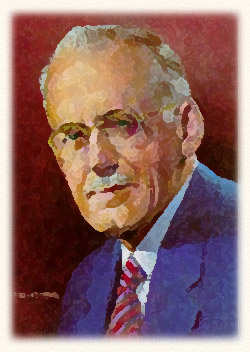
Good Morning. A.W. Tozer wrote years ago that personal holiness is a vital in order for God to answer our prayers. Of course, we also must must be sure to pray in God's will. It never hurts to get a words from Tozer every once in a while. Have a great day. Bryan
"When we go to God with a request that He modify the existing situation for us, that is, that He answer prayer, there are two conditions that we must meet: (1) We must pray in the will of God and (2) we must be on what old-fashioned Christians often call "praying ground"; that is, we must be living lives pleasing to God.
It is futile to beg God to act contrary to His revealed purposes. To pray with confidence the petitioner must be certain that his request falls within the broad will of God for His people.
The second condition is also vitally important. God has not placed Himself under obligation to honor the requests of worldly, carnal or disobedient Christians. He hears and answers the prayers only of those who walk in His way.
The second condition is also vitally important. God has not placed Himself under obligation to honor the requests of worldly, carnal or disobedient Christians. He hears and answers the prayers only of those who walk in His way.
'Beloved, if our heart condemn us not, then have we confidence toward God. And whatsoever we ask, we receive of him, because we keep his commandments, and do those things that are pleasing in his sight . . . . If ye abide in me, and my words abide in you, ye shall ask what ye will, and it shall be done unto you' (I John 3:21, 22; John 15:7)."
Monday, December 11, 2006
Divorce in the Church
Good Morning. I grabbed this off Rick Warren's website about the divorce within the church. I have been quoting Barna for years that evangelical Christians have a slightly higher rate of divorce than non-Christians. However, that may not be the case. Nevertheless, regardless of the divorce rate, we are to pray for married couples within our church, and especially for the rocky marriages.
Have a great day. Bryan
"While the prevailing wisdom says that born-again Christians are just as likely as non-Christians to divorce, that may not give the whole picture. Sociologist Brad Wilcox says that when church attendance is taken into the discussion, it isn't even close. Churchgoers - whether they are evangelicals, mainline Christians, or Roman Catholics - are far more likely not to get divorced than those who don't attend church."
- Source: Interview with Brad Wilcox in Christianity Today (October, 2006)
Have a great day. Bryan
"While the prevailing wisdom says that born-again Christians are just as likely as non-Christians to divorce, that may not give the whole picture. Sociologist Brad Wilcox says that when church attendance is taken into the discussion, it isn't even close. Churchgoers - whether they are evangelicals, mainline Christians, or Roman Catholics - are far more likely not to get divorced than those who don't attend church."
- Source: Interview with Brad Wilcox in Christianity Today (October, 2006)
Friday, December 08, 2006
Short and Sweet
Here is it...
"A man is what he is on his knees before God, and nothing more"
Robert Murray M'Cheyne
"A man is what he is on his knees before God, and nothing more"
Robert Murray M'Cheyne
Wednesday, December 06, 2006
Don Whitney on Revival

Good Morning! Back in 1986, Don Whitney wrote the following article on the need of revival in the church. He sees parallels between the state of the church prior to the Second Great Awakening and today...
REVIVAL WAS THE CHURCH'S ONLY HOPE
By Don Whitney
"How many thousands . . . never saw, much less read, or ever heard a chapter of the Bible! How many Ten thousands who never were baptized or heard a Sermon! And thrice Ten thousand, who never heard of the name of Christ, save in Curses . . . ! Lamentable! Lamentable is the situation of these people."[1]
Such was an Episcopal preacher's description of the spiritual conditions in the Carolinas prior to the Second Great Awakening. The same words could have been applied to the religious scene in most of America.
A terrible declension of Christianity followed the War of Independence. The outer ripples of the First Great Awakening were still seen as late as the 1770s when as much as 40 to 50 percent of the population attended church. But by the 1790s only 5 to 10 percent of the adult population were church members.[2] Revival historian J. Edwin Orr wrote:
The Methodists were losing more members than they were gaining. The Baptists said they had their most wintry season. The Presbyterians met in general assembly to deplore the ungodliness of the country. The Congregationalists were strongest in New England. [And yet the] Rev. Samuel Shepherd, pastor of a typical church in Lennox, Massachusetts, said in sixteen years he had not taken one young person into the fellowship. . . . The Lutherans were so languishing they discussed uniting with the Episcopalians, who were even worse off. The Protestant Episcopal bishop of New York, Bishop Samuel Provost, quit functioning. He had confirmed no one for so long, he decided he was out of work, so he took up other employment. The Chief Justice of the United States, John Marshall, wrote to Bishop Madison of Virginia and said, 'The church is too far gone ever to be redeemed.'[3]
Orr further notes that for the first time in American history, women were afraid to go out at night for fear of assault. Out of five million citizens, 300,000 were drunkards, and increased sexual immorality multiplied the numbers of illegitimate births and sexual transmitted diseases. Bank robberies were a daily occurrence. Dueling, wrote Daniel Dorchester a century later, "had become a great national sin. With the exception of a small section of the Union, the whole land was deeply stained with blood."[4]
The overall situation seemed so hopeless that a friend wrote to George Washington in 1796, near the end of his two terms as president, "Our affairs seem to lead to some crisis, some revolution; something that I can not foresee or conjecture. I am more uneasy than during the war." Washington replied, "Your sentiment . . . accords with mine. What will be is beyond my foresight."[5]
Five major factors contributed to the decline. First, the effect of the war itself. The independence movement had not been a unanimous one. The Revolutionary War was not a unified American effort, but a civil war where at least a third of the population was loyal to the crown perhaps another third undecided. The Christians in the colonies were divided over this issue as well and this affected the unity of local churches for years. The war also left many congregations without ministers. After sacrificing much for the sake of liberty, young soldiers returning home often found the insipid message and passionless mission of their formalistic, tradition-encrusted local church irrelevant by comparison. A young Timothy Dwight, who would become one of the leaders of the coming awakening, complained that "seven years of war had unhinged the principles, morality, and the religion of the country more than could have been done by a peace of forty years." [6]
Second, the impact of Tom Paine and rationalistic Deism. Paine was an American patriot and advocate of the French revolution. Few books in our history have been as popular (in terms of the percentage of the population who bought them) as his pair, The Rights of Man and The Age of Reason. He ridiculed Biblical Christianity and turned many to a reason-exalting Deism. Referring to the Bible, Paine scoffed, "It would be more consistent that we called it the word of a demon than the word of God."[7] To the Deist, God was distant and uninvolved in the world. Christianity was stripped of the supernatural and presented primarily as a moral code. Although the Deism of men like Paine and Thomas Jefferson flourished only briefly at the end of the eighteenth century, its influence was profound. Most Americans had never heard the divine origin of the Scriptures questioned, and they were unable to answer even the simplest objections.
The third cause of deterioration in the religious fabric was French infidelity. America's alliance with France during the War of Independence opened the gates for a flood of infidelity in the new nation. Whereas Deism typically showed reverence for God, those infected with the philosophies of Voltaire and Rousseau were invariably atheists. This French secularism was especially persuasive among the educated. "In 1783," illustrates Dorchester, "a revival occurred in Yale College, which swelled the membership of the college church larger than it had been before; but twelve years later the college was wholly pervaded with French infidelity, and only four or five students were professedly pious."[8] "Princeton fared no better," adds Orr, "there being one year no more than two students who professed religion."[9] Around the country, "infidel clubs abounded, with their usual accompaniment of sex orgies--so that the national existence was itself seriously jeopardized, thought some."[10]
Unitarianism was a fourth reason for the nation's erosion. Denying the Deity of Christ and drifting toward humanism, Unitarians gained control of many strategic Congregational churches during the years between the war and the turn of the century and split the denomination irreparably. A fifth and often overlooked factor was the westward expansion of the population. So rapidly had easterners left their homes that by 1800 nearly a million people had made their way west. This dramatic population shift not only weakened many churches in the east, it also intensified the irreligious climate of the west. The pioneer areas were often lawless and violent. In The Great Awakeners, Keith Hardman observes that "In many towns of considerable size, no place of worship could be found, and religious services had never been held. Therefore, several hundred thousand people were beyond the reaches of the gospel."[11]
Spiritual apathy, irreverence, skepticism, infidelity, atheism, immorality, illegitimacy, sexually transmitted diseases, drunkenness, dueling, robbery, rejection of Scripture, heresy, lawlessness, violence, and general godlessness characterized America in the last quarter of the 1700s. Was it really so bad, or has the situation been overstated for the sake of effect? Iain Murray admits that "The decline of Christian influence before a revival has sometimes been exaggerated in order to emphasize the scale of the subsequent transformation." However, in this case it is clear that "The Second Great Awakening in America requires no such distortion of history in order to justify its title."[12] Nothing less than a sovereign act by an omnipotent God could effectively deal with the situation. Revival was the church's only hope.
And revival was what God sent. A spark that He kindled in the 1790s burst into flame in the early 1800s as the Second Great Awakening, both in the apathetic, skeptical east and the lawless, godless west. The preaching of the Law of God awakened people's consciences, laid upon them an unrelenting conviction of sin, and terrified them with the realities of judgment and eternal punishment. Such preaching, followed by the application of the Gospel of Jesus Christ, resulted in the conversion of hundreds of thousands in the early decades of the nineteenth century. The wind of God's Spirit blew almost everywhere. New congregations began dotting the churchless western landscape. Bible-preaching churches back east were filled again. Christians hungered for the teaching of God's Word. Holy living became their passion. They delighted in prayer meetings and worship services.
It had been half-a-century since America had seen the Lord work so mightily. But He had not forgotten His people. He returned in great power and filled His once-degraded church with His glory.
--------------------------------------------------------------------------------
1. "The Return of the Spirit," Christian History, Issue 23, 24.
2. Mark A. Noll, A History of Christianity in the United States and Canada (Grand Rapids, MI: Eerdmans, 1992), 163.
3. J. Edwin Orr, "The Role of Prayer in Spiritual Awakening," Spirit of Revival, March 1995, 30.
4. Daniel Dorchester, Christianity in the United States (New York: Hunt and Eaton, 1889), 342.
5. J. Edwin Orr, The Light of the Nations (Grand Rapids, MI: Eerdmans, 1963), 17.
6. Mark Noll, et al., eds. Christianity in America:A Handbook (Grand Rapids, MI: Eerdmans), 162.
7. Quoted in "The Return of the Spirit," Christian History, Issue 23, 27.
8. Dorchester, 287.
9. Orr, 17.
10. Orr, 17.
11. Keith J. Hardman, The Spiritual Awakeners. (Chicago: Moody, 1983), 131.
12. Iain Murray, Revival and Revivalism. (Edinburgh: The Banner of Truth Trust, 1994), 116.
This article first appeared in Revival Commentary 1, no. 2 (Fall 1996): 5-7.
Copyright © 1996 Donald S. Whitney.
Copyright Disclaimer: All the information contained on the Center for Biblical Spirituality website is copyrighted by Donald S. Whitney. Permission granted to copy this material in its complete text only for not-for-profit use (sharing with a friend, church, school, Bible study, etc.) and including all copyright information. No portion of this website may be sold, distributed, published, edited, altered, changed, broadcast, or commercially exploited without the prior written permission from Donald S. Whitney.
Tuesday, December 05, 2006
Charles Spurgeon's Daily Devotion for Today

Good Morning. Below is Charles Spurgeon's daily devotion for today. Praise the Lord that we are safe in His hands. Have a great day. Bryan
Tuesday, December 05, 2006
Faith's Check Book, Daily Entry
C. H. Spurgeon
--------------------------------------------------------------------------------
December 5
High Places of Defense
He shall dwell on high: his place of defense shall be the munitions of rocks: bread shall be given him; his waters shall be sure. (Isaiah 33:16)
The man to whom God has given grace to be of blameless life dwells in perfect security.
He dwells on high, above the world, Out of gunshot of the enemy, and near to heaven. He has high aims and motives, and he finds high comforts and company. He rejoices in the mountains of eternal love, wherein he has his abode.
He is defended by munitions of stupendous rock. The firmest things in the universe are the promises and purposes of the unchanging God, and these are the safeguard of the obedient believer.
He is provided for by this great promise: "Bread shall be given him." As the enemy cannot climb the fort, nor break down the rampart, so the fortress cannot be captured by siege and famine. The Lord, who rained manna in the wilderness, will keep His people in good store even when they are surrounded by those who would starve them.
But what if water should fail? That cannot be. "His waters shall be sure." There is a never-failing well within the impregnable fortress. The Lord sees that nothing is wanting. None can touch the citizen of the true Zion. However fierce the enemy, the Lord will preserve His chosen.
Subscribe to:
Posts (Atom)